Healthy reference
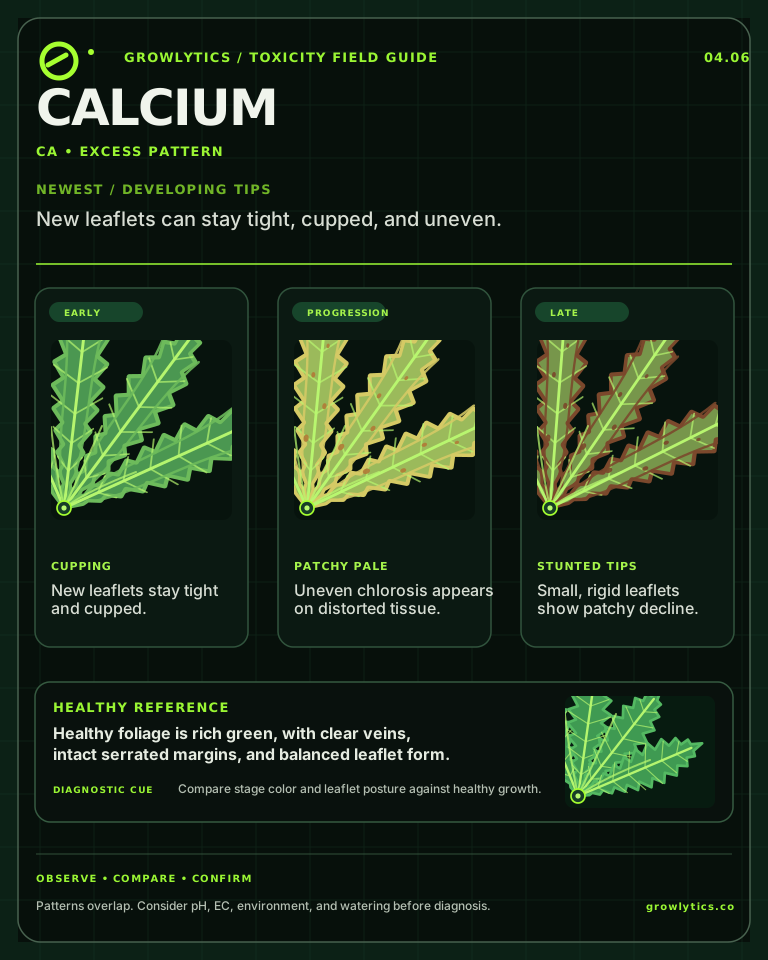
Compare fresh leaf expansion and tip shape with healthy new growth while considering root-zone and environmental conditions.
Possible excess pattern / 04
Tight or cupped new growth can be a context-sensitive pattern, not a confirmation of calcium excess by itself.
May show first
Newest growth and the root zone.
Pattern cues
Healthy reference
Compare fresh leaf expansion and tip shape with healthy new growth while considering root-zone and environmental conditions.
Early
New leaves may emerge tight, cupped, or unusually rigid.
Progression
Patchy chlorosis or distorted growth can resemble other uptake issues.
Late stage
Stunted tips, uneven leaf form, and compounded micronutrient stress signals may develop.
Not the same as deficiency
Deficiency guides describe patterns associated with limited availability. This toxicity guide records possible excess-pattern cues. Either pattern can resemble the other when uptake or growing conditions are disrupted.
Check before acting
These signals can overlap with nutrient lockout, pH or EC imbalance, watering and root-zone conditions, light or heat stress, and broader environmental factors. Use the pattern as an observation prompt, not a diagnosis or a treatment instruction.
Need a second look?
Scan a plant photo for AI-guided visual observations and keep the result alongside your grow history. A scan provides guidance, not a guaranteed diagnosis.